
GWOMJANG, Nigeria — Suspected Fulani gunmen attacked a predominantly Christian farming village in Nigeria’s Plateau state on Saturday evening, killing eight Christians and injuring at least 15 others as residents returned home from church services and a women’s prayer meeting.
The attack struck Gwomjang, a village in Kadunu Ward of Mangu Local Government Area near the town of Gindiri, in Nigeria’s Middle Belt — a region that has suffered years of armed violence against rural Christian communities. Gunmen entered the village at approximately 7:30 p.m., opening fire on civilians before fleeing. Four men and four women were killed, and the 15 wounded sustained injuries ranging from gunshot wounds to other trauma.
“After church service and after the women had finished their prayer meeting, people were returning to their homes as it was getting dark,” said Dung Ezekiel Sunday, the youth leader of Gwomjang and an eyewitness. “At that time, gunshots were heard in the community.”
Residents said the attackers approached from the direction of a nearby settlement and retreated along the same route. Villagers contacted soldiers stationed in the area shortly after the attack began, but the response came too late. “We contacted soldiers stationed in Kadunuwa, but they arrived around 10 p.m., after the attackers had already left,” Ezekiel said.
“The entire community was thrown into confusion,” Ezekiel said. “From what we saw during the incident, the attackers were believed to be Fulani men. We have lived with our neighbors for many years, and in the past, we maintained peaceful relations with them.”
A delegation sent by Mangu Local Government Chairman Emmanuel Bala Mwolpun and led by Deputy Chairman Yakwen Nuhu Lawal visited the community the following day, meeting with grieving families and injured survivors at local medical facilities. Lawal directed that patients requiring further care be transferred to Jos University Teaching Hospital, one of the region’s largest referral hospitals. Local government authorities announced they would cover all medical expenses for those injured during the attack.
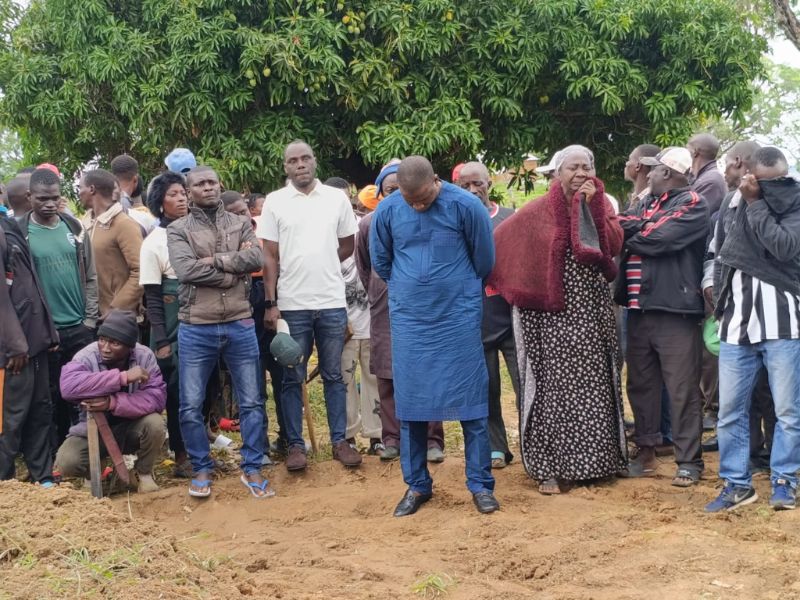
During a mass burial service attended by local officials, clergy, and community members, Lawal said he had witnessed the burial of the eight Christians killed in the attack and noted that additional fatalities had been recorded in related attacks affecting nearby communities. “We must not wait for the government alone to come to our rescue,” Lawal told mourners. “Report any suspicious movement or activity to security agencies immediately so that prompt action can be taken.”
Lawal acknowledged a persistent intelligence gap. “One of the challenges we face is that after attacks occur, no one can clearly tell us where the attackers came from or the routes they used,” he said. “We need greater vigilance, better information sharing, and stronger community cooperation.”
Ezekiel called for accountability, noting a pattern of impunity. “We are calling on the government to take decisive action to stop these attacks,” he said. “Many times, after such incidents, we hear reports that suspects have been arrested, but later we do not hear what becomes of those cases.”
The attack occurred during the planting season, a critical period for farming communities across Plateau state where residents depend on agriculture for their livelihoods. Ezekiel appealed directly for outside intervention: “We are appealing for assistance from the Nigerian government and the international community so that our people can be protected and our communities can live in peace and security.” Survivors continue to receive treatment, and community leaders say they expect authorities to investigate the incident and bring those responsible to justice.