
WASHINGTON - International Christian Concern published the first installment of a new series examining how environmental stress in fragile states intensifies the conditions under which Christians face violence, displacement, and discrimination, with Nigeria’s Middle Belt as the central case study.
The report, written by ICC Fellow Lisa Navarrette, draws a sharp distinction between climate-related hardship in countries with functioning institutions and the same pressures in regions where Christians already face armed attack. “Climate change does not persecute Christians. People persecute Christians,” the report states. “Extremist organizations, authoritarian governments, criminal networks, and hostile communities are responsible for acts of religious persecution. Yet environmental pressures can intensify the humanitarian, economic, and political conditions that make persecution easier to carry out and far more difficult for victims to recover from.”
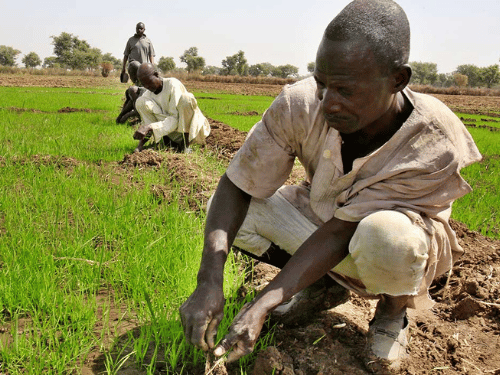
The series anchors its argument in ICC’s prior documentation of attacks on Christian farming communities in Nigeria’s Middle Belt, where families depend on agriculture for survival. In ICC’s report “Harvesting Hope in Nigeria,” Christian families described losing homes, churches, and farmland during violent attacks carried out by armed militants. For survivors, the report found, rebuilding meant restoring an entire way of life — not simply replacing a structure.
The Food and Agriculture Organization of the United Nations has documented how changing rainfall patterns, land degradation, and growing pressure on productive farmland are making it harder for rural communities in the region to sustain their livelihoods. Families displaced by violence may find that available farmland is less productive, more expensive, or already under pressure from growing populations and environmental change. The World Bank’s Groundswell report estimates that climate change could force up to 216 million people to migrate within their own countries by 2050 if meaningful adaptation measures are not implemented.
The Intergovernmental Panel on Climate Change’s Sixth Assessment Report has linked rising global temperatures to changing precipitation patterns, more frequent and intense heatwaves, prolonged droughts, heavier rainfall events, and rising sea levels — consequences most severe in countries with the fewest resources to respond. The United Nations High Commissioner for Refugees has warned that climate-related hazards increasingly intersect with armed conflict and forced displacement, creating humanitarian emergencies far more difficult to resolve than either challenge alone.
Navarrette’s report uses the contrast between a Nigerian subsistence farmer facing a failed rainy season and an American family recovering from a Gulf Coast hurricane to illustrate the gap. In the American case, utility crews restore power before sunset, insurance adjusters schedule inspections, churches organize volunteer teams, and local, state, and federal agencies mobilize emergency resources. In Nigeria’s Middle Belt, the same environmental event can trigger a chain reaction: harvests decline, food prices rise, livestock dies, families migrate, and communities compete over shrinking natural resources.
The ICC report is the first in a multi-part series titled “When Creation Groans.” Subsequent installments are expected to examine additional regions where environmental fragility compounds existing persecution of Christian communities.