
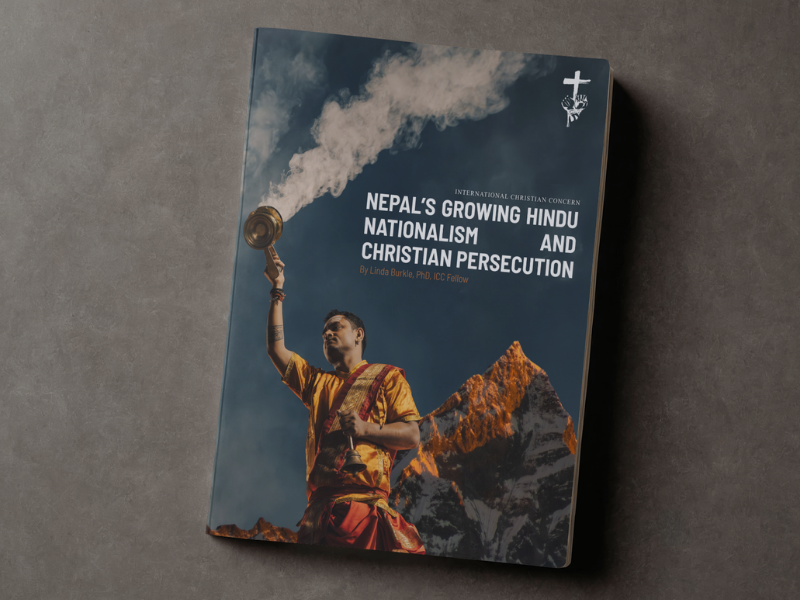
KATHMANDU, Nepal — International Christian Concern has published a new report documenting the link between rising Hindu nationalism in Nepal and intensifying persecution of the country’s Christian minority, which makes up just 1.76% of the population in a nation where more than 81% identify as Hindu.
The report, authored by ICC Fellow Linda Burkle, PhD, examines the discriminatory application of Nepal’s blasphemy and anti-conversion laws against Christians, the results of the country’s recent election, and the consequences for Nepali believers. According to Christian leaders in Nepal cited in the report, increasing Hindu nationalism “seeks both to reinforce Nepal’s identity as a Hindu nation and to suppress Christian growth.”
Christian converts, especially those who leave Hinduism, “often endure severe social consequences,” the Christian leaders said. Nepal maintained a nearly 200-year ban on Christianity before the faith began experiencing steady growth after 1951, with churches, Christian schools, and hospitals gradually expanding — particularly among oppressed communities seeking social acceptance and religious freedom.
The report arrives as Western governments and religious-liberty watchdogs track a pattern familiar across South Asia: state-level anti-conversion statutes weaponized against Christian minorities. Recent years have seen growing concern over attacks on churches, arrests of pastors, and the use of blasphemy and anti-conversion laws against Christians in Nepal. Hindu nationalist groups have become more active, and some reports suggest that political and ideological influences from neighboring India have strengthened anti-Christian sentiment in the country.
Burkle’s report traces how Nepal’s legal framework, combined with social hostility, creates a two-front pressure on the small Christian community. The full report is available through ICC’s website, and the organization has called for continued international attention to the situation facing Nepali Christians as Hindu nationalist political forces consolidate influence following the country’s recent elections.