
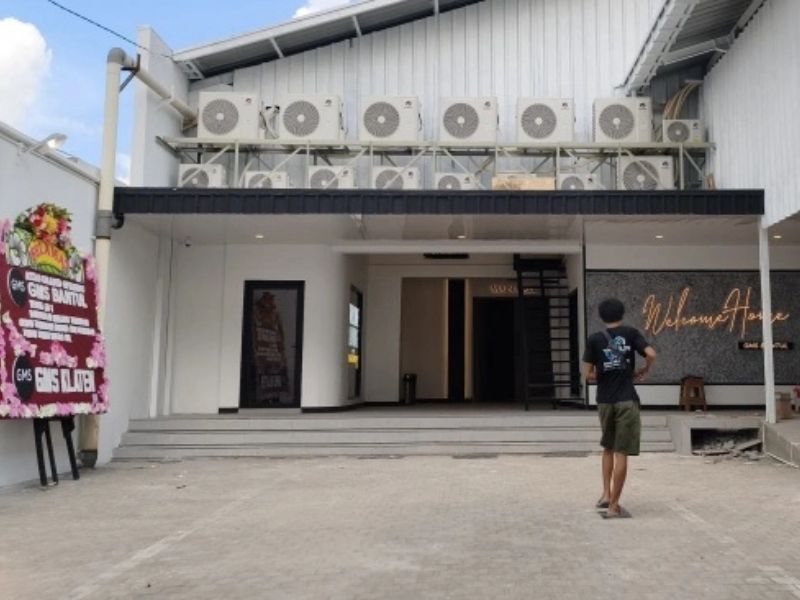
YOGYAKARTA, Indonesia — About 15 members of the Islamic Jihad Front FJI (Laskar) stormed a Sunday morning worship service at the Misi Sejahtera Church (GMS) in the Glugo area of Panggungharjo Village, Yogyakarta, demanding the congregation halt its gathering and disperse, according to the U.S.-based persecution monitor International Christian Concern.
The Islamist group, led by Abdurahman Abu Zaki, also known as Darohman, arrived at the church at 7:59 a.m. on May 24, citing the lack of a permit and opposition from some residents. A joint statement issued by several Islamic community organizations and local residents raised objections to the church’s activities, claiming the Glugo hamlet is predominantly populated by Muslims, with virtually no non-Muslim residents, and that Christian worship “could disrupt interfaith harmony and social harmony in the local community.” Facing an increasingly tense situation, the congregation dispersed at 8:30 a.m. The FJI Laskar left the church grounds at 9:05 a.m.
Gugun Gumilar, special staff to the Minister of Religious Affairs, called the disruption “a serious violation of the law.” Gumilar said he has “coordinated with the Yogyakarta Regional Police chief to have the perpetrators arrested.”
Yulius Suharta, acting leader of the National Unity and Politics Agency for Bantul Regency, stated that “the church had obtained a Report Certificate (SKTL) issued by the Yogyakarta Regional Office of the Ministry of Religious Affairs.” The local government is still reviewing whether that document is sufficient for the building’s use as a place of worship or whether additional administrative requirements remain.
The case fits a pattern documented across Indonesia, the world’s most populous Muslim-majority nation, where Christian congregations face persistent obstruction from Islamist groups and local governments that challenge the legality of church buildings and worship services. The GMS congregation had previously held regular services at a hotel in Bantul but moved to the rented building in Panggungharjo to reduce operational costs.
Indonesia’s permit system for houses of worship, governed by a 2006 joint ministerial decree requiring signatures from 60 local residents of a different faith and 90 congregation members, has long been criticized by international religious-freedom advocates as a tool used to block church construction in Muslim-majority areas. The U.S. Commission on International Religious Freedom has repeatedly flagged Indonesia’s enforcement of these regulations as discriminatory toward religious minorities.
Yogyakarta Regional Police have not yet announced formal charges. Gumilar’s coordination with the police chief signals that arrests could follow in the coming days.