
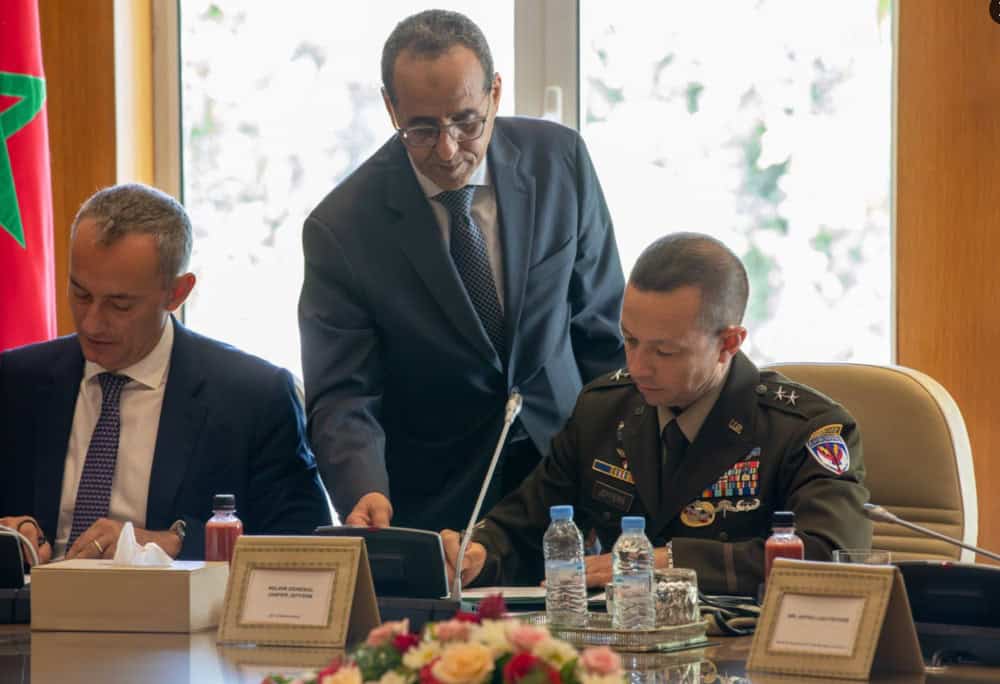
JERUSALEM — The Israeli cabinet approved the entry of an International Stabilization Force into Gaza, authorizing an initial deployment of up to 200 troops with the sign-off of Prime Minister Benjamin Netanyahu, the minister of defense, and the minister of foreign affairs.
The ISF is expected to draw soldiers and personnel from Kosovo, Albania, Morocco, and possibly Kazakhstan and other countries. Morocco signed an agreement to participate 10 days before the cabinet vote. “Moroccan forces will support humanitarian aid delivery to Gaza and help train the Palestinian Police Force,” the Board of Peace said. An Israeli official also said Uganda would participate.
The Board of Peace, established under the U.S.-backed ceasefire framework, called the decision a “very important development in the process to deliver peace, prosperity, and development in Gaza.” The board added that “these efforts will move forward with concrete actions over the coming months to introduce a new model of governance, security, and economic opportunity.”
Nickolay Mladenov, a former Bulgarian official appointed in January as the high representative of the Board of Peace for Gaza, endorsed the move. “I welcome steps by Israel that enable the deployment of the International Stabilization Force in Gaza, in accordance with UN Security Council Resolution 2803,” Mladenov wrote on X. He said the deployment is critical for stabilizing Gaza and supporting demilitarization, and would help enable a transition to a new Palestinian administration run by the National Committee for the Administration of Gaza. “The focus now [is] on ensuring that we move forward with the 20-point Plan for Gaza, including the implementation of the Roadmap as presented by the mediators,” Mladenov stated.
The Gaza 20-point peace plan, announced in early October 2025 and backed by UN Security Council Resolution 2803, has been incrementally supported by the United States over the past 10 months. U.S. Central Command set up a Civil-Military Coordination Center in October 2025, followed by the creation of a facility near the Gaza border called Logistic Support Area: Endurance in June. Israel’s Ynet reported that “the Cabinet decision effectively grants special status to the Board of Peace in Gaza and constitutes Israeli consent to launch a pilot program to restore basic services in Gaza, provide humanitarian aid and establish shelters in areas not controlled by Hamas.”
Hamas continues to control around 40 percent of Gaza’s territory, according to Israeli estimates, and the Israel Defense Forces carried out strikes on terrorists during the third week of July. The IDF said it eliminated a Palestinian Islamic Jihad member and struck a Hamas Internal Security forces member and a Hamas drone unit commander. The IDF also dismantled a tunnel it described as hundreds of meters long within the area of Gaza under Israeli control.
Netanyahu departed for the United States the day after the cabinet vote. The first ISF actions on the ground are expected in the coming weeks.