
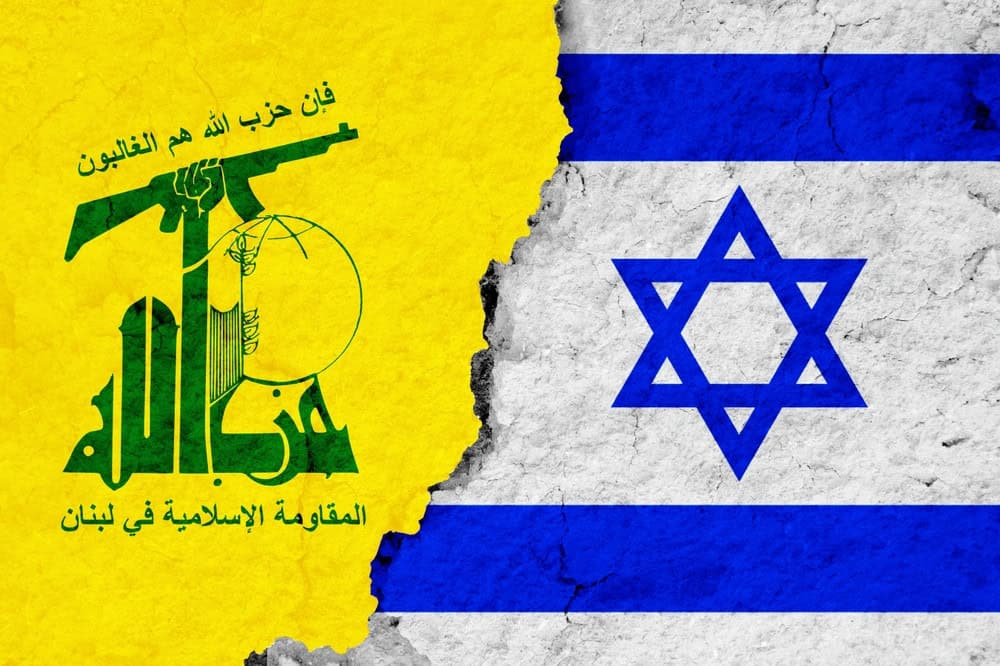
JERUSALEM - Israeli Prime Minister Benjamin Netanyahu and Defense Minister Israel Katz announced that the IDF demolished Hezbollah tunnel infrastructure in the Beaufort area of southern Lebanon using approximately 700 tons of explosives, linking the operation to what they called Hezbollah’s preceding violation of the ceasefire with an explosive drone attack on Ali Taher Ridge.
The IDF said Hezbollah launched an explosive drone overnight on July 29 toward an IDF engineering vehicle on the Ali Taher Ridge, a commanding position near Nabatieh at roughly 600 meters above sea level. Ynet reported the vehicle was hit but no casualties resulted. The IDF called the incident a “blatant violation” of the ceasefire that went into effect on June 19. The IDF’s 36th Division subsequently destroyed what it described as several principal tunnel routes near the Beaufort ridge.
An Israeli source familiar with deliberations told The Jerusalem Post that Israel would respond and that discussions were underway over the nature of that response. Ynet reported the IDF had identified Hezbollah’s subterranean infrastructure beneath Ali Taher as a possible target and that such an operation could rapidly restart fighting in Lebanon.
Hezbollah has neither claimed the attack nor issued a formal denial. “When it is us carrying out an operation, we claim it proudly,” an unnamed Hezbollah source told L’Orient-Le Jour, though he stopped short of formally denying responsibility. Lebanese media reports cited a local source who claimed the drone was intended to halt Israeli earthmoving activity around the ridge, but those reports neither identified the responsible party nor provided supporting evidence.
The Ali Taher Ridge has already proved costly for the IDF. Five Israeli soldiers were killed in two attacks around Ali Taher and nearby Kfar Tebnit on June 19-20. Four died when their tank was hit by what an IDF probe assessed was either an antitank missile or an explosive drone. In a second attack, one soldier was killed and 13 wounded by rockets, mortar fire, and an explosive drone near Kfar Tebnit. The IDF describes the tunnel system beneath Ali Taher as a “nerve center” of Hezbollah’s Badr regional division, one of the group’s principal territorial military formations in southern Lebanon.
The drone strike came as the U.S.-brokered framework agreement linking Israel’s progressive withdrawal from southern Lebanon to verified Hezbollah disarmament moves slowly forward. On July 20, the U.S. State Department announced pilot zone operations in Froun, Srifa, and Zawtar Al Gharbiyeh as the first phase. Reuters reported Israeli troops withdrew from Zawtar and the Lebanese Armed Forces deployed there on July 21, but implementation has proceeded slowly, with no timetable or third-party verification mechanism settled. Hassan Jouni, a retired Lebanese general, told Reuters that further Israeli withdrawals were unlikely until the Ali Taher issue was resolved — either through Israeli capture of the ridge or Lebanese troops clearing Hezbollah’s weapons stores.
IDF Chief of Staff Lt. Gen. Eyal Zamir visited southern Lebanon on July 29 and said the IDF would advance farther into Lebanon if necessary and would not withdraw from territory it held until Israel’s long-term security is guaranteed. Channel 12 reported separately that Israel has ruled out further withdrawals from territory on its side of the “yellow line” — the forward edge of Israel’s security zone — until Hezbollah is disarmed. Ynet reported the July 29 incident appeared to be Hezbollah’s first use of an explosive drone against an Israeli target since the ceasefire began, raising the question of whether the framework agreement can hold as both sides contest control of the strategic ridge.