
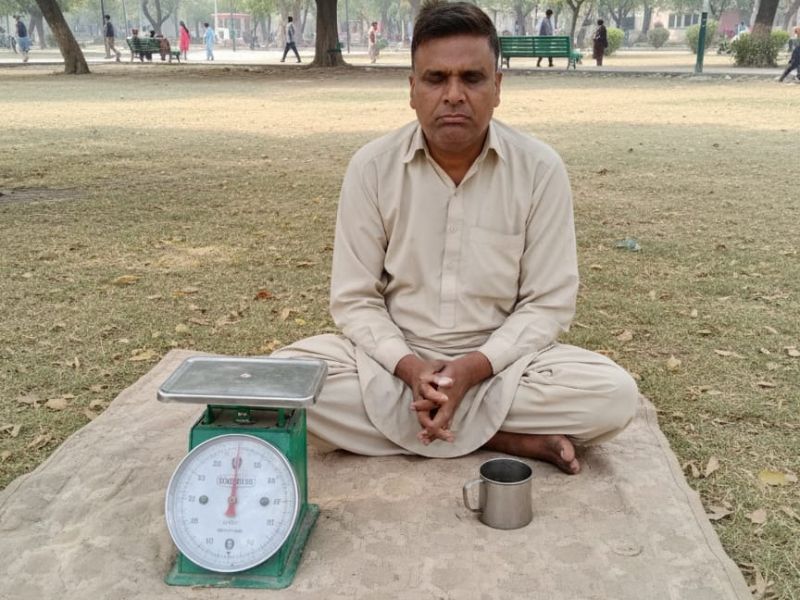
LAHORE, Pakistan — A Lahore court acquitted Nadeem Masih, a visually impaired Christian man who spent 10 months in prison after park workers fabricated a blasphemy accusation against him to avoid repaying money they owed him, the U.S.-based monitoring group International Christian Concern reported.
Lahore Additional Sessions Judge Saad Salman Khan ordered the acquittal after the prosecution failed to provide sufficient evidence. The case against Masih, who was arrested on Aug. 21, 2025, showed multiple inconsistencies: the police report claimed the alleged blasphemy occurred at 11 p.m. in Model Town Park, where Masih worked, even though the park closes to the public at 9 p.m. Statements from two key prosecution witnesses raised further doubts about the credibility of the allegations.
Masih’s mother, speaking through tears, said “it feels like nothing less than a miracle to have her son back home safely.” Before his arrest, Masih was the primary provider for his family. After his father’s death, he completed a formal arts degree under the disabled quota and, unable to secure a formal job, set up a small spot in Model Town Park with a weighing machine to earn a living. Park visitors, moved by his determination, frequently gave money generously.
Park workers regularly stole from Masih and borrowed money they had no intention of returning, according to ICC’s account. The conflict began when Masih demanded his borrowed money back. Refusing to pay, the workers used a blasphemy accusation to silence him — a pattern that has become increasingly common in Pakistan, where the blasphemy law is weaponized to settle personal vendettas, financial disputes, and property scores.
The scale of the crisis across Punjab is staggering. According to the annual report of the Human Rights Commission of Pakistan, 812 people were imprisoned on blasphemy-related charges in Punjab alone during 2025 — 796 men, 15 women, and one juvenile. In an environment where such accusations carry severe extrajudicial risks, including mob violence and targeted killings, the Lahore court’s decision to acquit on the merits of the evidence is notable but does little to address the underlying abuse of the statute.
Pakistan’s blasphemy laws, which carry penalties up to death, have drawn sustained criticism from Western governments and international human-rights bodies. Christians, who make up roughly 1.5 percent of Pakistan’s population, are disproportionately targeted. The U.S. Commission on International Religious Freedom has repeatedly recommended Pakistan’s designation as a “country of particular concern” for religious freedom violations.