
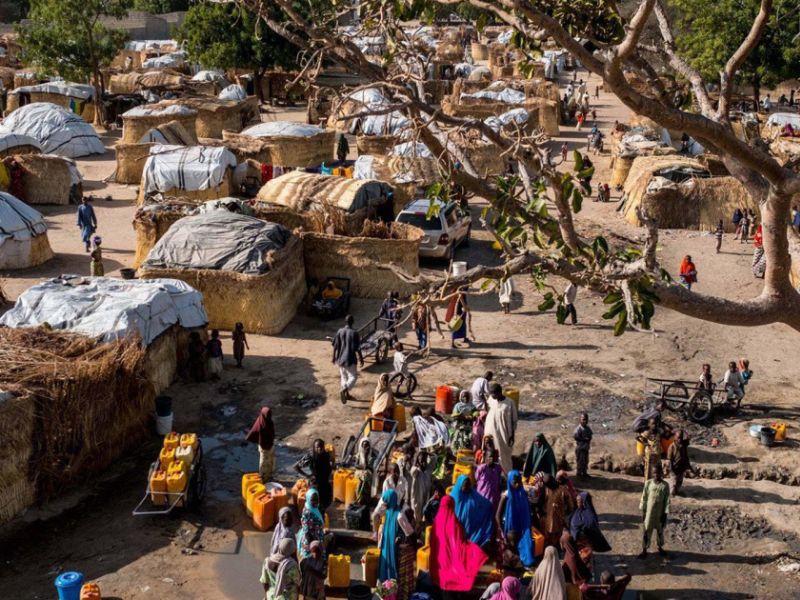
MAIDUGURI, Nigeria — The Nigerian army rescued at least 360 people held captive by Boko Haram militants in a remote hideout in the Mandara Mountains of Borno state near the Cameroon border, Nigerian authorities announced this week, ending months of captivity for hundreds of women and children abducted during a devastating March attack on the village of Ngoshe.
Local community leaders from the Borno South Youth Alliance dispute the military’s account on both the numbers and the method. They claim the number of freed captives exceeds 400 and contend that months of direct negotiations with the militants — not a military assault — secured the release. Representatives of the group publicly criticized government officials for taking credit for what they described as a negotiated humanitarian outcome.
The Nigerian military described the operation as one of its most significant hostage rescue missions in recent years, stating that troops conducted an intelligence-driven assault on the militants’ mountain stronghold that forced some insurgents to flee and others to surrender. Government officials reported that two infants died from exhaustion and the harsh conditions endured during captivity. Images released by authorities showed groups of exhausted captives gathered beneath trees receiving medical screening and emergency assistance.
The captives were taken during a large-scale Boko Haram assault on Ngoshe in March, when heavily armed militants descended on the community in the evening, killing numerous civilians, attacking a military installation and a camp for displaced persons, and abducting hundreds of women and children. Local leaders described the violence as among the worst seen in the area since Boko Haram’s territorial expansion more than a decade ago.
Boko Haram, founded in 2002 as an Islamist movement in northern Nigeria, launched a violent insurgency in 2009 seeking to impose its interpretation of Islamic law. The group later fractured into multiple factions, including the Islamic State West Africa Province, which aligned with the global Islamic State movement. Both Boko Haram and ISWAP remain active across the region. Tens of thousands of people have been killed, hundreds of thousands displaced, and countless others abducted for ransom, forced labor, sexual exploitation, or recruitment. Religious freedom advocates have long warned that Christians face particularly severe and disproportionate persecution from these Islamist groups in central and northern Nigeria, where Boko Haram has repeatedly targeted churches, Christian villages, and pastors.
The United States returned Nigeria to its Countries of Particular Concern list in 2025, citing serious violations of religious freedom and ongoing violence affecting religious communities. International Christian Concern, the U.S.-based monitoring group that reported the release, has documented the persistent targeting of Christian communities alongside broader civilian suffering from the insurgency.
Survivors now face the process of recovery and reunification with their families, while kidnapping remains one of the most common tactics employed by extremist groups and criminal gangs throughout Nigeria. Attacks by Boko Haram, ISWAP, and armed bandits continue to destabilize large portions of the country despite increased security spending and repeated government pledges to restore order.