
ISLAMABAD, Pakistan — An organized criminal network is exploiting Pakistan’s blasphemy laws to trap, arrest, and extort religious minorities through social media schemes, with the number of blasphemy cases in 2024 increasing by a factor of almost 50 times since 2020, according to a report by the persecution watchdog International Christian Concern.
The network, which originated in the cities of Rawalpindi and Islamabad and has since expanded across much of the country, includes members of Pakistan’s Federal Investigation Agency who “freelance” on behalf of the operation, using their law enforcement authority to conduct arrests that function as kidnappings, ICC reported. The primary objective is extorting bribes from targets in exchange for dropping criminal charges. At least several cases have seen the abuse in custody turn fatal.
“If they target someone, then they try to find any loophole in their [social media] posts that can be exploited,” said “Simon,” a Pakistani Christian who spoke to ICC under a pseudonym. Simon confirmed that most blasphemy accusations now pertain to alleged behavior on social media platforms, where operatives stalk religious minorities and bait them into statements that can be construed as blasphemous.
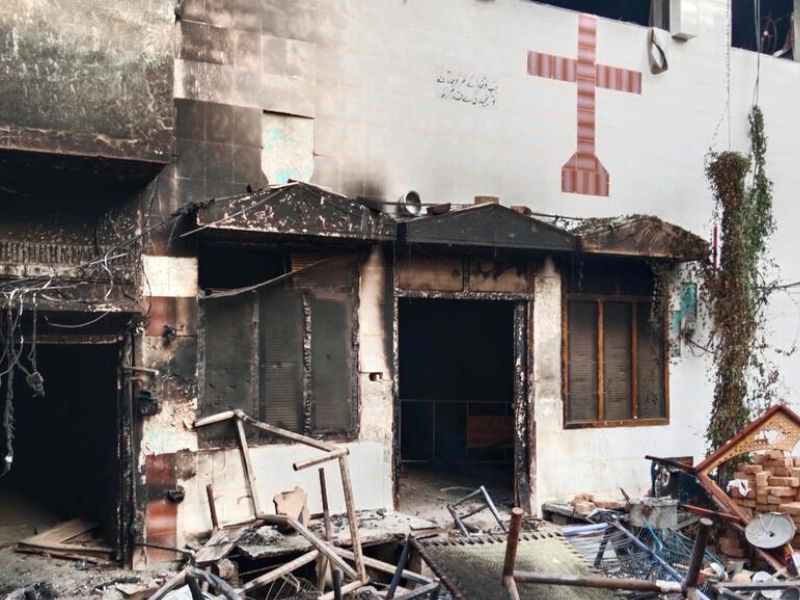
The methods are deliberate. Operatives use fake female profiles on WhatsApp to lure young men into groups where blasphemous material is already shared. In some cases, the target is given administrative privileges over the group before the original administrator exits, leaving the victim as the apparent owner of content he never created or requested. Screenshots are then taken and used as leverage. If the target resists extortion, the evidence is leaked to employers, family members, and local imams. Mob attacks triggered by such accusations have destroyed dozens of homes at once, forcing entire Christian communities to flee.
Simon said many individuals behind the accusations and related mobs are associated with Tehreek-e-Labbaik Pakistan, the hardline Islamist group established in 2015 that has pushed Pakistan to enforce its blasphemy laws more aggressively. Mob participants at blasphemy trials routinely surround courthouses to pressure judges, though disputes between organizers and unpaid participants have revealed that many are motivated by profit rather than religious conviction.
No demographic in Pakistan is entirely safe, but Christians, Hindus, and Islamic sects deemed heretical face the greatest risk. Pakistani Christians who spoke with ICC conveyed deep fear. “The questions you are asking are very sensitive,” one unnamed Christian told the organization, reflecting a pervasive paranoia even when communicating with Western contacts.
Some Pakistani officials have attempted to address the abuse. In January 2024, a special branch inspector in Punjab province produced a report titled “The Blasphemy Business,” documenting the coordinated extortion network. In July 2025, the Islamabad High Court ordered Pakistan’s federal government to form a commission to investigate the abuse of the blasphemy laws — but approximately one week later, the order was suspended. Simon said he believes Pakistan’s current federal government wants the situation to stop. “But sometimes the social pressure gets the better of you,” he added.
The U.S. Commission on International Religious Freedom has designated Pakistan a “country of particular concern” for religious freedom violations. ICC’s report, authored by R. Cavanaugh, adds to mounting evidence that Pakistan’s blasphemy statutes have become an instrument of organized crime targeting the country’s most vulnerable religious communities, with the network’s connections extending to prominent Islamic religious scholars and state officials alike.