
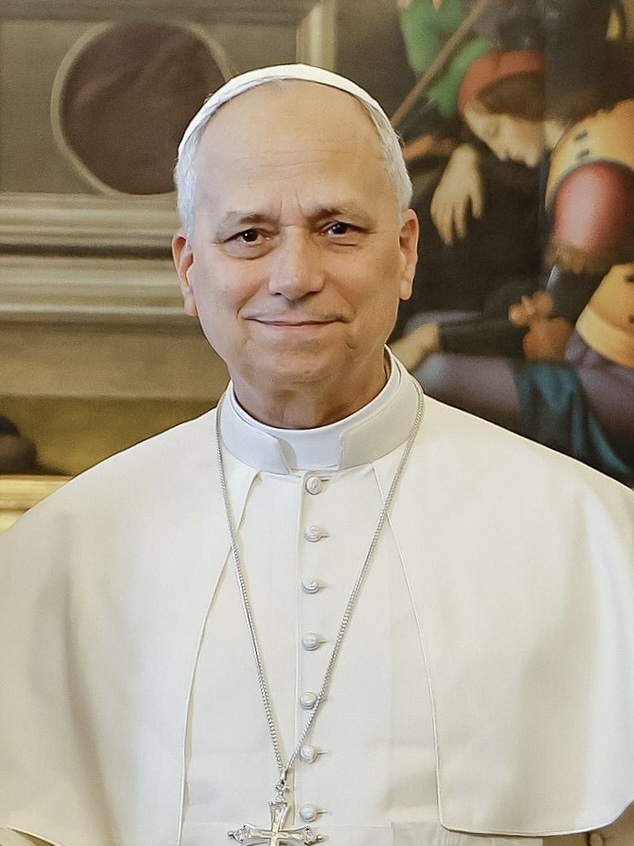
MADRID — Pope Leo XIV became the first pontiff to address a joint session of Spain’s Congress of Deputies, delivering a pointed challenge to lawmakers over the country’s legal protections for euthanasia, assisted suicide, and a pending constitutional amendment on abortion, telling them that “the defense of human life is neither a partisan issue nor a confessional interest: it is a goal of civilization.”
The U.S.-born pope, who spent nearly two decades serving in Peru, spoke to hundreds of lawmakers and judiciary leaders in a speech that drew on Spain’s own Catholic intellectual tradition to press the case for the inviolable dignity of the human person. “If life ceases to be recognized as a fundamental value, what future can our societies have?” he asked. “Can a community that casts into the shadows the unborn child, the elderly, the sick, those who suffer in silence, or those who depend entirely on the care of others be called fully just?”
Euthanasia and medically assisted suicide are legal in Spain, and the government led by Prime Minister Pedro Sánchez is now considering an amendment to constitutionally protect the right to abortion. Pope Leo addressed both directly, telling lawmakers that when “the most vulnerable are the first victims, the law loses its deepest meaning: to serve and protect every person.”
The address came against a backdrop of severe political crisis. The Sánchez government has been struggling with legislative deadlock, intense polarization, and risks of collapse from corruption accusations and investigations. Francina Armengol, president of the Congress of Deputies, acknowledged that the international order is “crumbling” and drifting away from norms aimed at coexistence. “We have no choice but to come together around what is essential and reformulate the measures that commit us to shaping a more just world,” Armengol said before the pope’s address.
Pope Leo grounded his argument in the work of 16th-century Catholic theologians at the University of Salamanca, who challenged the moral legitimacy of Spain’s conquest and enslavement of Indigenous peoples in the Americas more than 500 years ago. “When Spain found itself facing historic responsibilities of universal scope,” the pope said, “Salamanca would undertake, with particular clarity, the moral and legal reflection that the situation demanded.” Those thinkers introduced the idea of “the irreducible value of every human being and the moral limits of power,” he said, which led to the core principles of international human rights — even though “society and the Church herself did not always live up to these insights.”
The pope urged lawmakers to apply what he called the “Salamanca Question” to modern challenges, including new technologies and biomedicine. “Every truly just society is built upon the recognition of the inviolable dignity of the human person,” he said. “Such dignity precedes any concession by the state and cannot be subordinated to shifting social consensus or the whims of the majority at any given moment,” referencing Pope Benedict XVI’s 2011 address to the German parliament.
Being invited to speak before a national legislature is rare for a pope. St. John Paul II was the first to address the Italian and Polish parliaments. Pope Benedict XVI spoke to the parliaments of the United Kingdom and Germany. Pope Francis became the first pope to address a joint meeting of the U.S. Congress in 2015. Pope Leo arrived in Madrid on June 6 and followed the usual protocols of meeting King Felipe VI, addressing civil society and diplomats, and visiting church-run charitable organizations.
Spain’s parliament faces a legislative calendar that includes the proposed constitutional amendment on abortion, a measure Pope Leo’s address appeared designed to confront directly before lawmakers take it up.