
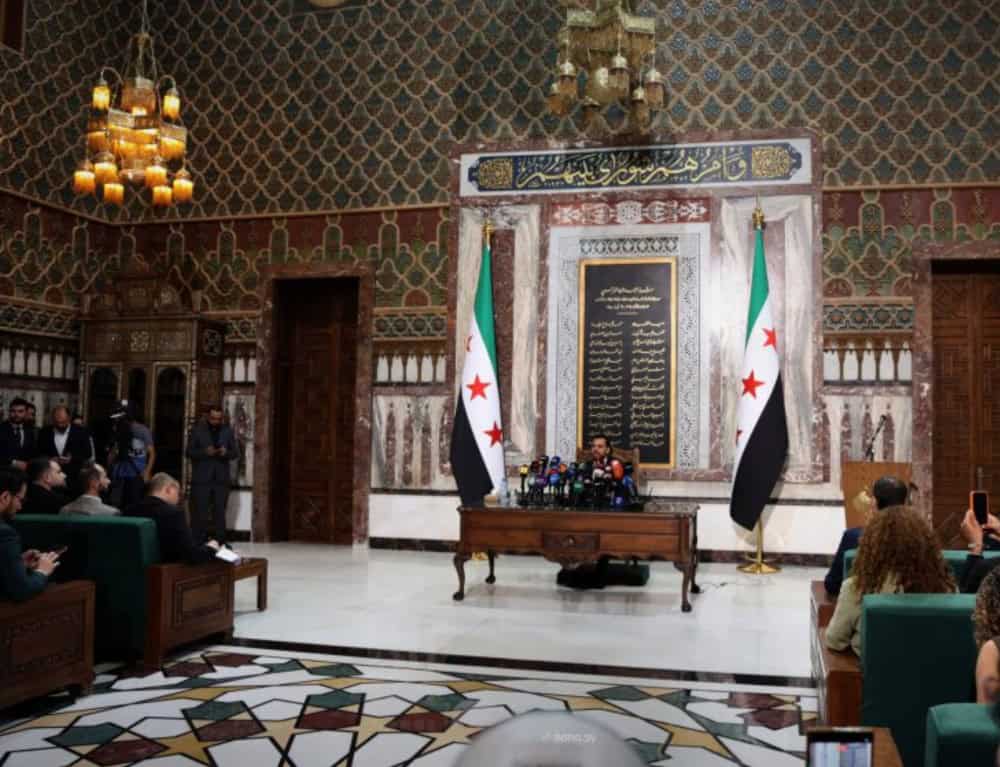
DAMASCUS - Syria’s Higher Committee for People’s Assembly Elections announced the final roster of the country’s new 210-seat parliament, combining 140 members chosen through a regional election process with 70 presidential appointees named by President Ahmed al Sharaa — even as Israeli military operations near the southern border triggered fresh clashes with Syrian civilians.
The parliament, called the People’s Assembly, is expected to convene for the first time on July 6. Mohammad Taha al-Ahmad, chairman of the Higher Committee for People’s Assembly Elections, said at a press conference in Damascus that “the composition of the Assembly is intended to strengthen national representation and enrich parliamentary work through a combination of diverse expertise and professional experience.”
The 70 appointees include 15 women, representing 21.4% of the presidential selections, the Syrian Arab News Agency reported. The Secretary-General of the People’s Assembly said the final one-third of the body comprises 23 community leaders and 47 professionals, including 12 members with master’s degrees and 17 with doctoral degrees. The appointees span all 14 provinces: 14 from Aleppo, seven from Hasakah, six each from Homs and Deir Ezzor, five each from Damascus, Damascus Countryside, Hama and Idlib, four each from Daraa and Latakia, three from Raqqa, and two each from Quneitra, Tartous and Sweida.
Sharaa’s list includes members of Syria’s minority Druze and Kurdish populations, but Kurdish and Druze groups have raised concerns about insufficient representation. The Kurdish Rudaw Media Network reported that few Kurds were among the final appointments. The Kurdish-led Syrian Democratic Forces did not officially participate in the earlier vote and reportedly backed some independent candidates; Sharaa’s appointees do not include any SDF-affiliated figures, Rudaw reported. Among the Druze selected is Laith al Balous, described as pro-government. The Druze-controlled area of Suwayda in southern Syria did not take part in the election process because it is controlled by a Druze faction that opposes rule by Damascus.
The 140 elected members were chosen over the past year through a process in which a small number of electors were appointed in regions across Syria’s provinces and then voted to select the representatives.
While Damascus finalized the parliamentary roster, tensions along the 1974 ceasefire line on the Golan Heights continued to escalate. The Associated Press reported that as Israeli troops and vehicles entered the town of Abdin in southern Syria, “residents blocked the roads with rocks, and some young men and boys threw stones to push back the military patrol.” North Press Agency reported that the IDF shelled areas in Daraa and Quneitra near the border. Days earlier, the Israeli military said it had “eliminated several armed terrorists in a clash in Syria” without providing further details. The IDF has largely declined to comment on operations in Syria in recent months, though Syrian media regularly reports small incidents near the border.
The People’s Assembly is scheduled to hold its inaugural session on July 6, when the scope of its legislative authority under Sharaa’s transitional government will come into sharper focus.