
WASHINGTON - The expiration of Temporary Protected Status protections for Syrians in the United States this week has put a sharp focus on the precarious position of Syria’s ancient Christian communities, who remain vulnerable more than a year and a half after the fall of dictator Bashar al-Assad’s government.
TPS, a humanitarian immigration designation that shields recipients from deportation while conditions in their home country are deemed unsafe, was redesignated for Syria by the Biden administration in 2024, citing ongoing instability following more than a decade of civil war. The program does not provide a pathway to permanent residency. With its expiration, Syrians in the United States who held the designation now face potential removal to a country where sectarian tensions persist and rule of law remains weak.
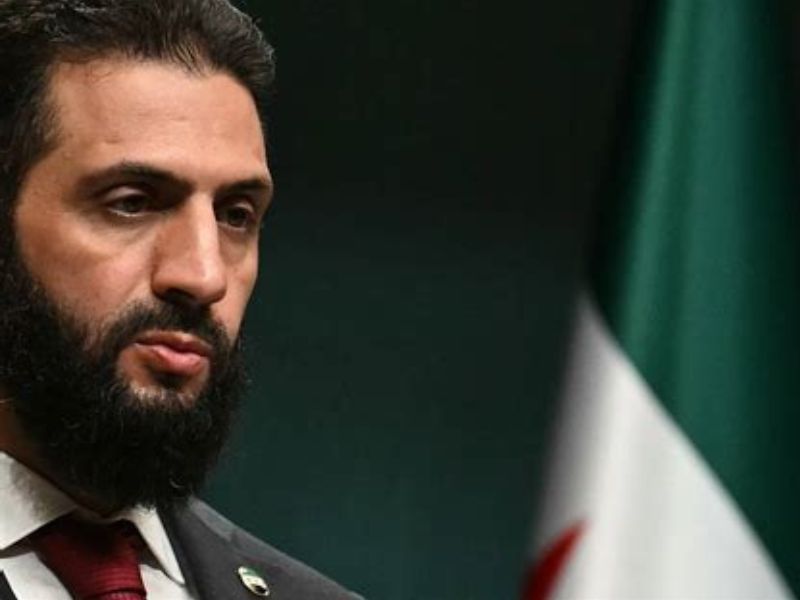
Syria’s transitional government, led by Ahmed al-Sharaa — formerly known as Abu Mohammed al-Golani, the leader of Hayat Tahrir al-Sham — took power after rebel forces entered Damascus and forced Assad from power in December 2024. HTS had previously been associated with jihadist movements, including al-Qaida, before attempting to reposition itself as a nationalist Syrian political actor. Al-Sharaa’s government has repeatedly pledged to protect Syria’s diverse religious communities, but critics argue that promises of inclusion must be measured against actions on the ground.
Syria’s Christian population is among the oldest in the world, tracing its roots to the earliest centuries of Christianity. Before the civil war, Christians represented a significant minority, with communities concentrated in Damascus — where the Apostle Paul was converted on a street called Straight, which still exists — Aleppo, Homs, and the Orontes Valley. Hundreds of thousands of Christians fled the country as fighting spread, extremist groups including the Islamic State gained territory, and ancient churches were destroyed.
Since the transition began, Syria has experienced episodes of sectarian violence affecting multiple communities. Reports have documented attacks against Alawite civilians, Druze communities, and other minorities. Christians have not experienced the same level of targeted mass violence as some other groups, according to the monitoring group International Christian Concern, but incidents of harassment, attacks on Christian communities, and uncertainty over the role of religion in the new state have contributed to deep anxiety.
The U.S. Commission on International Religious Freedom has warned that Syria’s transitional authorities have struggled to ensure religious freedom and rule of law, citing violence against multiple religious communities and concerns about minority representation in government institutions. International recognition, sanctions relief, and reconstruction assistance for al-Sharaa’s government are expected to hinge in part on whether Syria develops institutions capable of protecting all citizens regardless of faith or ethnicity.
For Syria’s Christians, the coming period will test whether al-Sharaa’s pledges of pluralism translate into security, equal citizenship, and freedom to practice their faith — or whether the pattern of emigration and demographic decline that accelerated during more than a decade of civil war continues under a new regime with jihadist roots. USCIRF’s ongoing monitoring of Syria’s religious freedom conditions is expected to factor into future congressional deliberations on any redesignation of TPS or other protective measures for Syrian nationals.